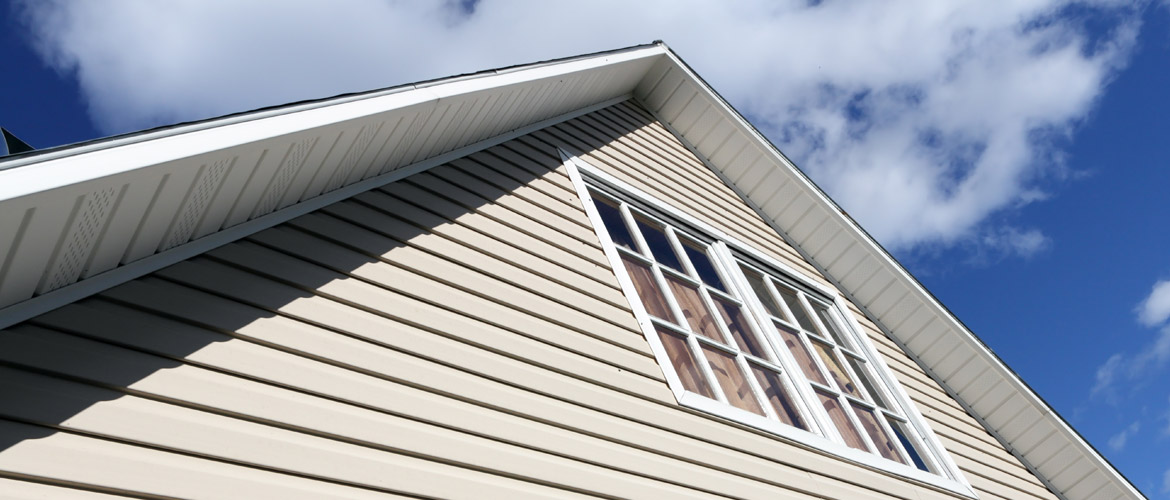
Short answer: yes. Vinyl siding can be painted, but …
Whether vinyl siding should be is a different question. We talk to homeowners about this all the time, and the honest answer to this question depends on a few things: the age of your siding, your budget, what you’re actually trying to accomplish, and whether you’re prepared for the maintenance of what comes after.
Before you commit to a paint job, here are 12 real risks worth thinking about.
If your vinyl siding is still under warranty, you’re going to want to avoid doing this DIY project.
Most vinyl siding manufacturers won’t honour a warranty on a product that’s been painted. That’s true even if the siding is otherwise in great shape and the paint job looks perfectly fine.
Home insurance can be another issue.
Some insurance companies will deny a siding-related claim on the grounds that the product was altered. This may not be a common issue, but it does happen with many insurance companies.
Read the fine print on both the warranty and on your insurance policy before you do anything. If you’re unsure, give your insurance company a call; it only takes ten minutes and could save you a headache later.
Painting siding isn’t the same scale of project as rolling paint on your bedroom wall.
To paint vinyl siding properly, you’re looking at a paint sprayer for even application, ladders or scaffolding for the upper sections, tape and sheeting to protect windows and trim, and enough paint for multiple coats over a large surface area.
If you don’t already own all this equipment, rental and supply costs add up faster than you may anticipate. The savings from doing it yourself can be gone before you’ve even finished the prep work on the house.
Speaking of prep work … Prepping an entire house to be painted is a large undertaking.
Homeowners often budget for painting time and forget about everything that comes before it. The siding needs to be washed thoroughly, dried completely, primed, and taped off. All of this before a single coat of paint goes on.
This prep work can easily take a full day on its own, sometimes longer depending on the size of the house.
And unlike new siding, a painted exterior has to be maintained. You’re not doing this once and moving on … it’s a full commitment.
On average, paint on vinyl siding lasts about five years before it needs to be redone … and in many cases, it needs to be redone sooner.
It all depends on how much sun the siding gets, how much moisture it’s exposed to, winter conditions, and how well the paint bonded in the first place.
Don’t forget, repainting every five years means another prep process, more equipment rentals and another supply run.
As a comparison, new siding installations typically carry manufacturer warranties of 30 years or more with no painting involved.
Regular exterior paint won’t stick to vinyl properly.
You need a water-based formula with a blend of acrylic and urethane resins, specifically made to flex with vinyl as it expands and contracts through temperature changes. This is particularly important to think about in the Barrie area where it gets very hot in the summer, and very cold in the winter.
But more on that later …
Use the wrong paint and you’ll see it start to peel or blister within a season. Some of the worst paint failures aren’t the result of a bad application; they were the result of using the wrong product.
This is really important if you’re planning to go darker than your current siding colour. Dark paint absorbs a lot more heat from the sun than vinyl is realistically built to handle. That trapped heat behind the siding can cause the panels to warp or buckle, and once that happens you’re stuck replacing the siding because it’s not something you can fix.
If you’re considering painting, the rule of thumb is to match with your existing colour or go lighter. If you’re set on a darker shade, you’re better off replacing the siding with a product that comes in the colour you actually want.
Even with the right paint and a suitable colour, the prep work is what makes or breaks the job.
The surface of the siding needs to be clean, free of mildew or chalky residue, primed, and painted with an even coat across the whole area.
If you cut corners on any of the prep time or product quality, the paint job won’t last as long as it should. If you’re putting all this work into it, you don’t want it to start peeling.
RELATED: How to Clean Vinyl Siding Before Painting or Replacing It
When a contractor removes old vinyl siding for a replacement, it’s not unusual to find rotting wood, moisture damage, mould, or pest activity that wasn’t visible from the outside. Painting over the existing siding does nothing to uncover any of that.
If there’s moisture damage building behind your panels, painting over them doesn’t buy you time. It just keeps the problem out of sight while it gets worse.
A replacement gives a contractor the chance to find those issues and deal with them before new material goes on. Catching problems early can actually save you money in the long run.
If your siding is 15 or 20 years old, it likely wasn’t installed with insulation behind it. A lot of modern vinyl siding products include a foam insulation layer that older installations simply didn’t have.
Painting will change how the exterior looks, but it won’t change how much heat your home loses in January or how hard your air conditioning has to work in July. If energy costs are part of why you’re thinking about this project, a replacement with insulated siding is worth pricing out.
It may actually be more cost effective to replace your siding.
This matters more than people realize.
Paint needs to go on when temperatures are above 10°C, the surface is completely dry, and there’s no rain in the forecast for at least a day or two afterward. You will also need a nice day for all the prep work. So you’re going to need the better part of a week of clear weather to get this project done.
In this part of Ontario, that window is roughly late May through June, with a shorter stretch in early September. Miss it and you’re waiting another year. Applying paint in cold or damp conditions means it won’t bond properly and will likely start peeling before the next spring.
There’s also the freeze-thaw cycle to think about. Winter in Barrie and surrounding areas puts vinyl through a lot of expansion and contraction. Paint that isn’t flexible enough will crack along the surface before the snow is even gone.
Paint refreshes colour. It doesn’t fix dents, cracks, warped panels, or anything that’s physically wrong with the siding underneath. All of that will still show through once the paint dries.
It also won’t give you any of the profile or finish options that come with new siding. If you’re looking for a particular texture, trim detail, or style, a paint job won’t get you there.
Sure, a good-looking paint job can help with curb appeal before a sale … but it can also raise serious questions.
Home inspectors and buyers may ask how old the siding is underneath, and peeling or uneven paint can hurt a listing more than fresh siding would have helped it.
A siding replacement costs more upfront, but it tends to offer a better return on investment and doesn’t require any explanation to a buyer.
New siding is visible value.
Painting can be the right call if your siding is structurally sound, not too old, and you’re working within a limited budget for now. It can buy you some time, but are the risks worth it?
Replacement usually makes more sense if the siding is aging, showing wear, or if you want a real upgrade in appearance or performance. When you add up the cost of repainting every five years, the long-term math favours starting fresh; particularly if you consider the energy savings.
If you’re not sure where your siding stands, a professional look at the existing material can tell you whether painting is a realistic option or whether the money would go further toward something new.
RELATED: Aluminum Siding vs. Vinyl Siding: Which Should You Choose?
Our team at T. Simpson Roofing works with homeowners across Central Ontario on siding installations built to last. If you’d like an honest assessment of what your siding actually needs, we’re happy to take a look.
Learn more about our siding services or call us at 1-800-925-3044.
Yes, vinyl siding can be painted. It requires a water-based acrylic-urethane paint made for vinyl surfaces, along with thorough prep work before anything goes on. It’s doable, but it comes with risks and ongoing maintenance that are worth understanding first.
It depends on what you’re working with. If the siding is in good shape and you’re on a tight budget, painting can be a reasonable short-term fix. If the siding is older, damaged, or you want a significant improvement in curb appeal or energy performance, replacement is usually the better investment.
Around five to seven years under good conditions. In climates like Barrie, and Central Ontario, where temperature swings are significant through the winter and spring, that window can be shorter, especially if conditions weren’t ideal when the paint was applied.
A water-based paint with acrylic and urethane resins. This type of paint is flexible enough to move with the vinyl as it expands and contracts. Standard exterior paint won’t bond properly to the surface.
If the siding is in good condition and budget is the main concern, painting can extend its life. If it’s showing its age, has physical damage, or you want a real upgrade, replacement is worth the investment. Getting a professional opinion on the state of your existing siding is the best place to start.