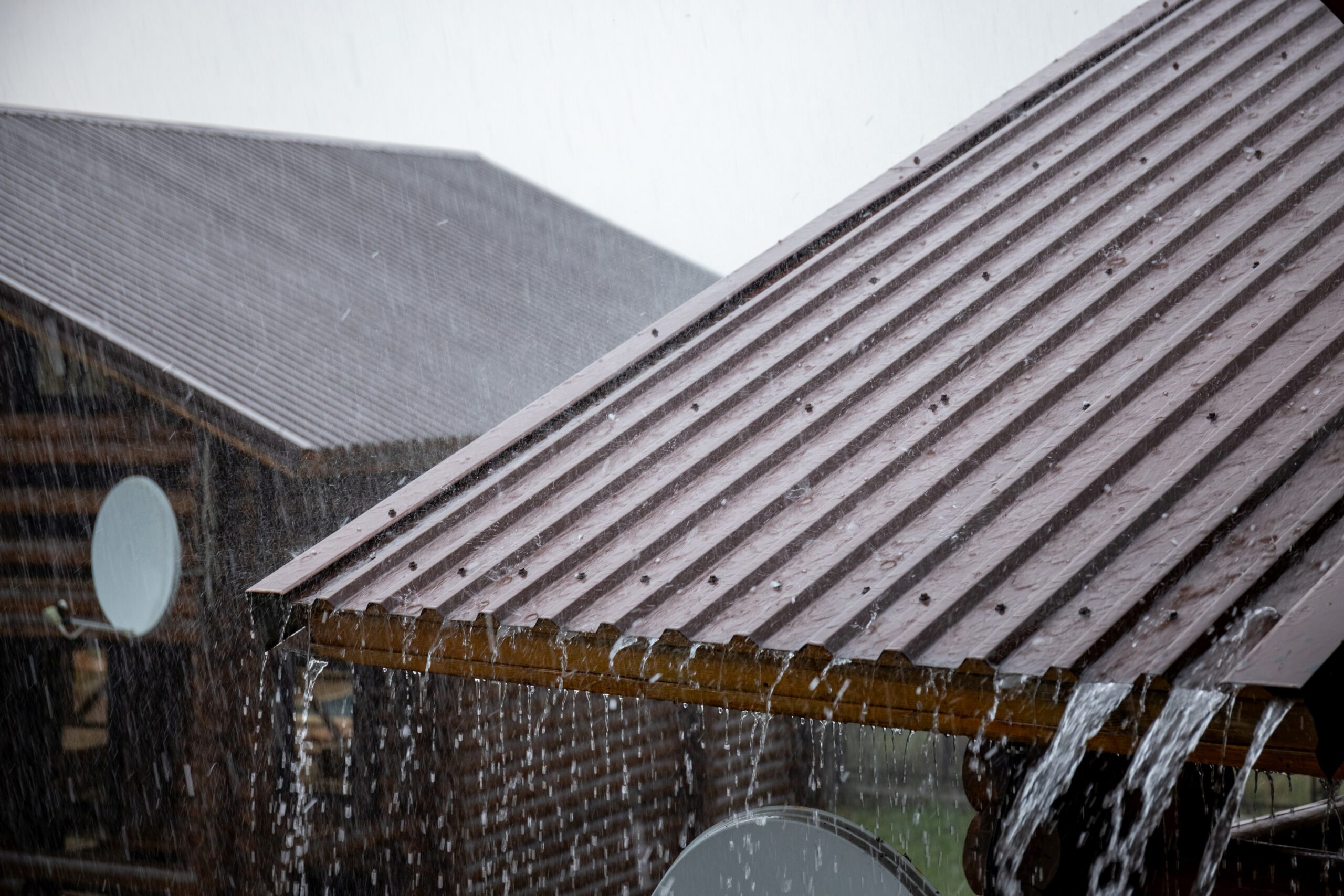
If you’re considering a metal roof, one concern pops up more than any other: “Will it be noisy when it rains?”
It’s a fair question. After all, the idea of hearing a drumbeat of raindrops overhead doesn’t sound appealing, especially in Ontario when storms can be heavy.
The good news? Modern residential metal roofs are far quieter than most people expect.
In this article, we’ll dive into this topic and address other myths about metal roofing.
Short answer: No, not when installed properly.
Many people imagine a metal roof as a giant drum, with raindrops clanging constantly overhead. This perception generally comes from old barns or uninsulated metal sheds. But modern residential metal roof systems are built very differently. They sit over underlayment, insulation, and sometimes sound-deadening layers, all of which absorb and diffuse sound.
The result? Rain sounds no louder than it would on an asphalt shingle roof.
The slope of your roof can influence how rain sounds.
Steeper roofs make raindrops fall faster, which can make the sound slightly sharper, but it’s usually not noticeable inside the home.
The type of metal panel also matters.
Standing seam panels with concealed fasteners tend to transmit less sound than corrugated panels with exposed fasteners. Choosing the right panel type can help keep your roof quiet, even during heavy storms.
What you hear inside your home depends as much on your attic and ceiling design as the roof itself.
A well-insulated attic absorbs vibration and muffles sound, while vaulted ceilings or minimal insulation can make rainfall more noticeable. Proper insulation and ceiling design can make the difference between a faint patter and a distracting noise.
Hail, melting snow, or heavy downpours may increase sound temporarily. Even so, the noise is short-lived and far from the “drumming” many homeowners imagine.
Modern metal roofs are engineered to handle these conditions safely while keeping interior noise low. Many Barrie and Newmarket homeowners report that even during heavy rain, their metal roofs are quieter than expected.
Learn more about how long metal roofs last in Ontario in our How Long Does a Metal Roof Last? article.
It’s helpful to put metal roofs in context:
When properly installed, a modern metal roof is often as quiet or quieter than most other roofing materials, especially when insulation and underlayment are included.
For a deeper comparison of metal versus shingles, see our Metal Roofing vs Shingles guide.
Noise isn’t the only myth about metal roofs. Ontario homeowners also have concerns about rust, lightning, cost, and snow. Let’s take a look at the facts.
Fact: Metal roofs do not attract lightning.
Metal is a good conductor, but that doesn’t make it a magnet for strikes. Lightning is attracted to the tallest point on a property or an object with a direct path to the ground, regardless of material. A properly grounded metal roof is just as safe as asphalt shingles or tile.
In fact, because metal conducts electricity well and is non-conbustible, any lightning strike is safely dispersed across the roof and into grounding systems. This reduces the chance of localized damage.
Fact: Modern metal roofs are built to resist corrosion.
Steel and aluminum panels are coated with advanced finishes that protect against rust, fading, and the effects of moisture. Even in Ontario’s wet climate, a properly installed metal roof rarely shows corrosion, and minor scratches are easily managed.
Rust concerns often come from older metal roofs or low-quality products. Today, the coatings and finishes used in residential roofing are designed for decades of exposure to rain, snow, ice, and humidity, making metal roofs a long-lasting choice for homes in Barrie, Newmarket, and the surrounding communities.
Fact: Upfront costs are higher, but long-term value is strong.
A metal roof does cost more initially than asphalt shingles, but it often lasts twice as long. Over 40–50 years, the longevity of a metal roof can offset multiple asphalt replacements, repairs, and maintenance. For many homeowners, the higher upfront investment translates into savings over time and it can help increase resale value if you plan on selling down the road.
Beyond lifespan, metal roofs can sometimes reduce insurance costs because of their durability against storms and fire resistance.
The combination of longevity, minimal maintenance, and performance in Ontario winters often makes metal a smart long-term investment, even if the price seems steep at first.
Fact: Metal roofs shed snow more effectively than shingles.
Metal roofing has a smooth surface that encourages snow to slide off naturally. This helps prevent heavy buildup and reduces the risk of ice dams, which is a common problem in our neck of the woods.
In addition, properly designed roofs include safety measures, like snow guards, to control sliding snow.
Many homeowners find this feature is actually a benefit. It reduces stress on the roof and decreases the likelihood of leaks or structural damage. So while a metal roof may shed snow more easily, it’s engineered to do so safely.
Many misconceptions about metal roofing come from outdated designs or commercial examples. Uninsulated barns, cheap sheds, and older roofing systems have shaped public perception, but modern residential metal roofs are very different.
They’re engineered for comfort, noise control, durability, and safety. When installed correctly, they perform quietly during rain, resist corrosion, shed snow effectively, and last for decades … even in Ontario’s varied climate.
Metal roofs have developed a lot of misconceptions over the years, but the reality is very different. When installed with proper underlayment, insulation, and design considerations, they’re quiet during rain, resistant to rust, safe in storms, and built to last for decades … even in Ontario’s variable climate.
If you’re deciding between roofing materials, a metal roof’s longevity, low maintenance, and weather performance make it a strong option. For a deeper look at how metal compares to other roofing types, check out our Metal Roofing vs Shingles guide.